MyOasis Ecosystem - Discovery Project | Responsive Web App & Enterprise Software

Project Summary: Drove redesign of the MyOasis commerce and enterprise analytics ecosystem within a complex healthcare environment, aligning patient, provider, and operational priorities while leading platform UX strategy and CRM optimization to reduce system friction, improve efficiency, and mitigate long-term delivery risk.

My Role: UX & Platform Strategy / Experience Architecture (IA) / Visual & Interaction Design / Design Facilitation / Stakeholder & Ecosystem Alignment

Project Summary: Drove redesign of the MyOasis commerce and enterprise analytics ecosystem within a complex healthcare environment, aligning patient, provider, and operational priorities while leading platform UX strategy and CRM optimization to reduce system friction, improve efficiency, and mitigate long-term delivery risk.

My Role: UX & Platform Strategy / Experience Architecture (IA) / Visual & Interaction Design / Design Facilitation / Stakeholder & Ecosystem Alignment

Collaborators

Collaborators

Lead Software Engineer, Principal Project Manager

Lead Software Engineer
Principal Project Manager

Target Audience

Target Audience

Eye Doctors, Patients

Platform

Platform

Responsive E-commerce
Web App, Data Analytics
Dashboard and CMS
B2B2C Environment

Stakeholders

Stakeholders

MyOasis: CFO, CEO & COO

Duration

Duration

5 Weeks

Challenge

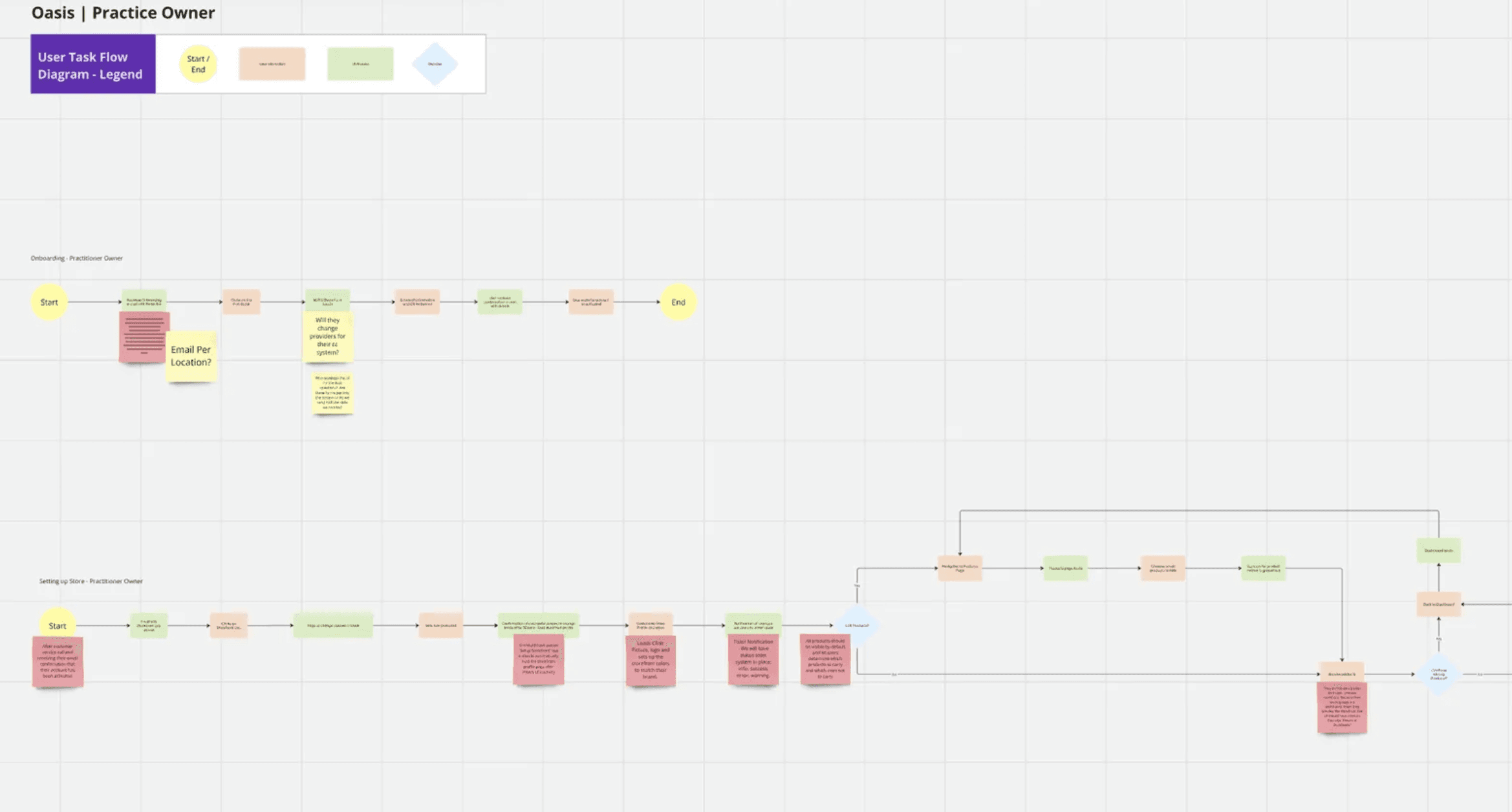
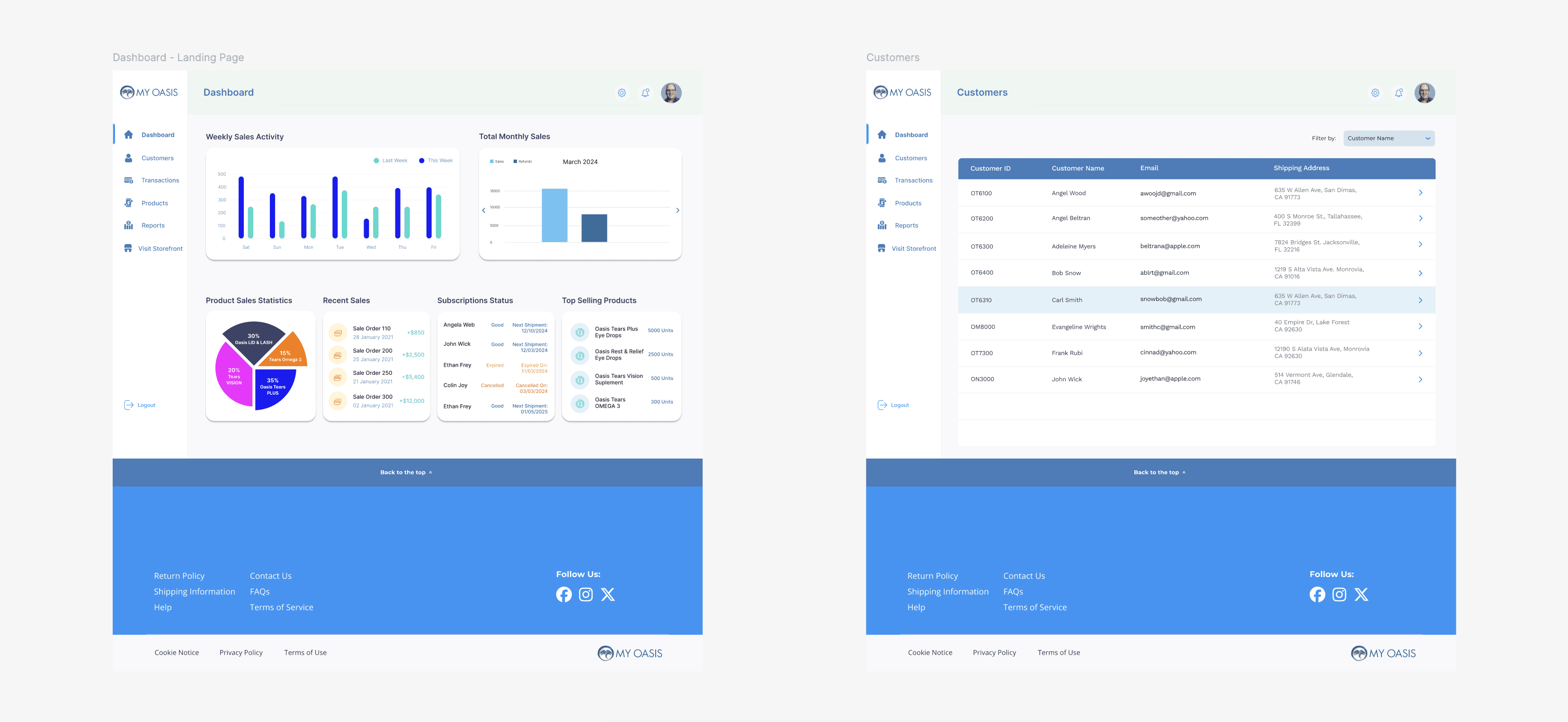
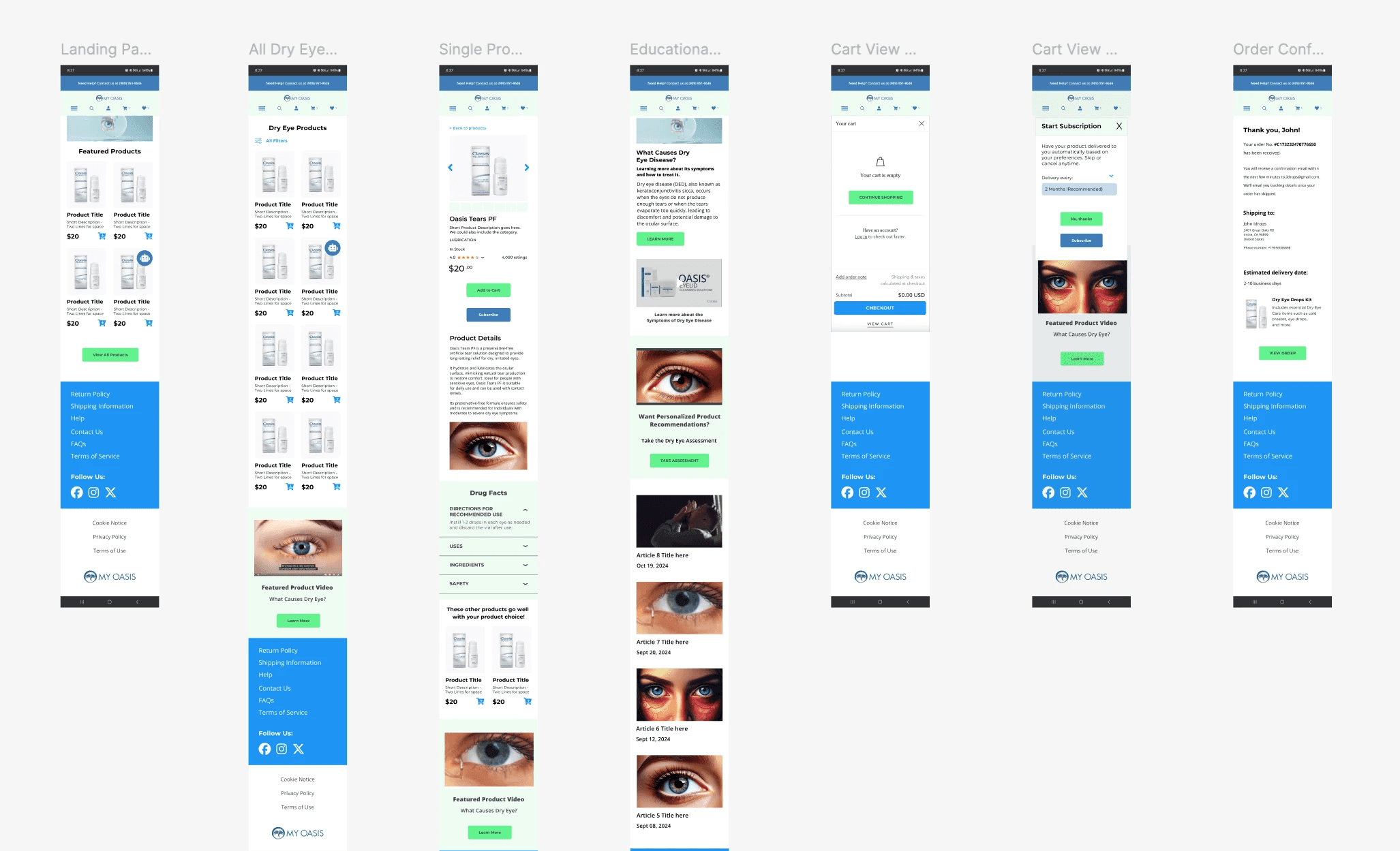
The MyOasis ecosystem faced dual adoption risks: Mobile usability barriers limited patient commerce engagement, while disconnected provider sales tracking reduced operational visibility and weakened alignment between care delivery and product fulfillment workflows.

Business Goals

  • Expand patient engagement and product conversion across mobile commerce channels while equipping providers with integrated sales intelligence to drive revenue growth and care-to-commerce continuity.

    Projected Impact Metrics below:
    Based on comparative usability testing, stakeholder analytics review, and benchmark modeling against similar healthcare commerce platforms.

75%

Improved onboarding process for target users

45%

Increase in user retention

84%

Increase in user engagement and session length

Design Stack

Design Stack

Design Stack

The Project

Discovery Insights:
The core barrier to adoption was not feature scarcity, but workflow complexity. Patients struggled with checkout flexibility while providers lacked scalable mechanisms to support repeat purchasing behaviors.

Rather than expanding feature breadth, the strategy focused on reducing transactional friction and introducing extensible commerce patterns that could support long-term subscription and payment flexibility.

Project Outcomes:
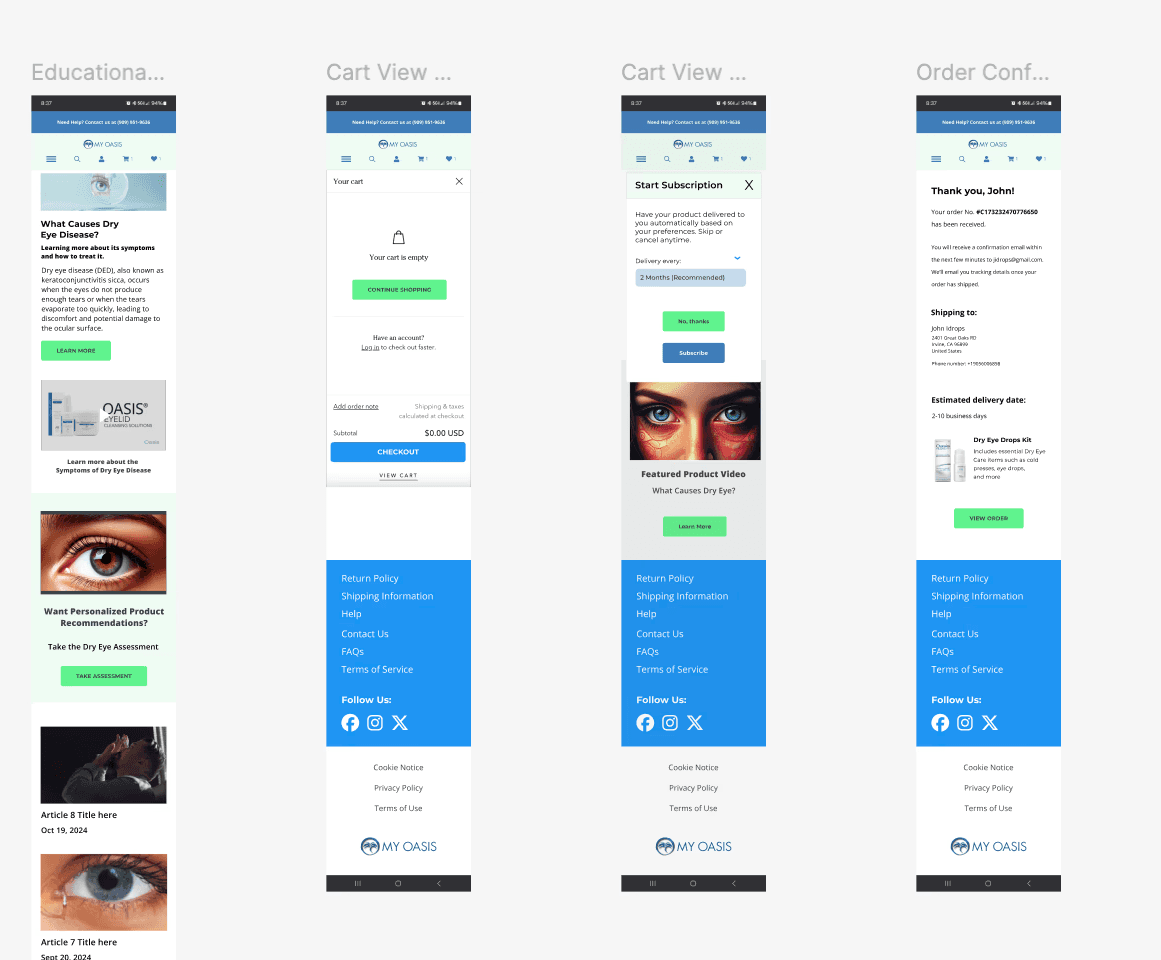
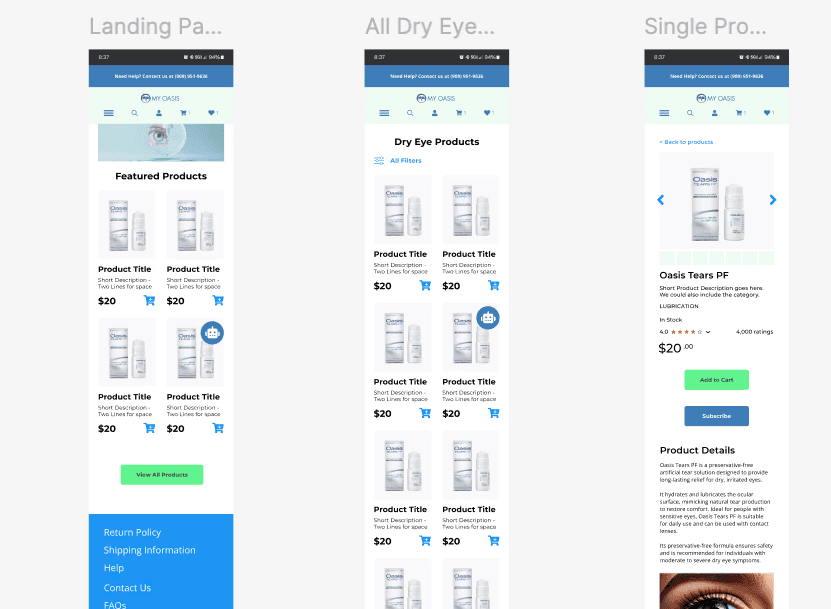
• Simplified the checkout architecture reducing decision fatigue and improving mobile usability
• Established payment and subscription foundation supporting recurring revenue
• Created aligned patient and provider workflows elevating care-to-commerce continuity
• Introduced modular experience patterns supporting CRM+analytics integrations

What Was Intentionally Simplified:
• Reduced checkout decision points prioritizing clarity and mobile completion rates
• Consolidated navigation pathways to minimize cognitive load for first-time purchasers
• Standardized product purchase flows across patient and provider experiences

What Was Postponed:
• Advanced personalization/recommendation logic dependent on behavioral data
• Full subscription lifecycle management
• Deep analytics dashboards for providers requiring additional backend reporting

Discovery Insights:
The core barrier to adoption was not feature scarcity, but workflow complexity. Patients struggled with checkout flexibility while providers lacked scalable mechanisms to support repeat purchasing behaviors.

Rather than expanding feature breadth, the strategy focused on reducing transactional friction and introducing extensible commerce patterns that could support long-term subscription and payment flexibility.

Project Outcomes:
• Simplified the checkout architecture reducing decision fatigue and improving mobile usability
• Established payment and subscription foundation supporting recurring revenue
• Created aligned patient and provider workflows elevating care-to-commerce continuity
• Introduced modular experience patterns that supported CRM and analytics integrations

What Was Intentionally Simplified:
• Reduced checkout decision points prioritizing clarity and mobile completion rates
• Consolidated navigation pathways to minimize cognitive load for first-time purchasers
• Standardized product purchase flows across patient and provider experiences

What Was Postponed:
• Advanced personalization and recommendation logic dependent on behavioral data
• Full subscription lifecycle management
• Deep analytics dashboards for providers requiring additional backend reporting

Design Principles That Guided the MyOasis Redesign

Due to competing stakeholder needs, platform constraints, and long-term scalability risks, the team aligned around a set of decision principles to guide prioritization and solution design.

1. Reduce Friction Before Expanding Features:

Prioritized simplifying core purchasing workflows over introducing additional commerce capabilities. The team focused on improving mobile usability and checkout clarity to remove adoption barriers before expanding advanced functionality such as personalization or subscription lifecycle management.

2. Design for Ecosystem Continuity, Not Isolated Transactions:
Ensured patient, provider, and operational workflows remained connected across commerce, care delivery, and analytics touch points. Solutions were evaluated based on their ability to strengthen long-term care-to-commerce continuity rather than optimize single interaction points.

3. Favor Scalable Foundations Over Short-Term Customization:
Invested in modular experience patterns and flexible payment architecture that could support future CRM integration and recurring purchase models. Avoided highly customized solutions that would increase maintenance complexity or limit platform extensibility.

4. Balance Stakeholder Value Through Progressive Enablement:
Balanced competing needs across patients, providers, and operational teams by prioritizing improvements that delivered immediate usability and revenue value while creating pathways for future ecosystem maturity.

5. De-Risk Through Incremental Platform Evolution:
Introduced changes that reduced immediate workflow friction while intentionally deferring high-complexity integrations and automation until backend systems, reporting infrastructure, and organizational policies could sustainably support them.

Visual Design

Recognizing opportunities to improve experience clarity and brand cohesion, I conducted exploratory visual design studies outside the formal discovery scope. These explorations evaluated updated color palettes and typography systems to support accessibility, modernize the MyOasis visual identity, and establish a scalable foundation for future product development.

These explorations also served as a foundation for evaluating accessibility contrast standards and visual scalability across mobile and desktop environments.

Lessons Learned


Leadership Lesson | Alignment Is a Continuous Design Deliverable:
This discovery reinforced that alignment is not a milestone achieved at the beginning of a project, but an ongoing leadership responsibility. Navigating competing priorities across patients, providers, engineering, and business stakeholders required establishing shared decision principles and maintaining continuous communication throughout the project lifecycle. By treating alignment as a core design outcome, the team was able to move quickly, reduce ambiguity, and make lower-risk decisions while maintaining a unified ecosystem vision.

Product & Strategy Lesson | Scalable Foundations Outperform Feature Expansion:
The project reinforced the importance of prioritizing foundational experience improvements over rapidly expanding feature sets. Rather than addressing individual usability issues in isolation, the team focused on reducing workflow friction and establishing flexible commerce patterns that could support subscription models, CRM integrations, and long-term ecosystem growth. This approach ensured that short-term usability gains did not introduce technical or operational constraints that would limit future product scalability.


Leadership Lesson | Alignment Is a Continuous Design Deliverable:
This discovery reinforced that alignment is not a milestone achieved at the beginning of a project, but an ongoing leadership responsibility. Navigating competing priorities across patients, providers, engineering, and business stakeholders required establishing shared decision principles and maintaining continuous communication throughout the project lifecycle. By treating alignment as a core design outcome, the team was able to move quickly, reduce ambiguity, and make lower-risk decisions while maintaining a unified ecosystem vision.


Product & Strategy Lesson | Scalable Foundations Outperform Feature Expansion:
The project reinforced the importance of prioritizing foundational experience improvements over rapidly expanding feature sets. Rather than addressing individual usability issues in isolation, the team focused on reducing workflow friction and establishing flexible commerce patterns that could support subscription models, CRM integrations, and long-term ecosystem growth. This approach ensured that short-term usability gains did not introduce technical or operational constraints that would limit future product scalability.

“Merilly played a crucial role in several internal projects, bringing not just strong design execution but also a sharp, strategic mindset that helped shape better outcomes. What really stood out, though, was her ability to quickly onboard mid-project when we needed coverage, seamlessly picking up where another designer left off. That’s no small feat, but they handled it with confidence and efficiency.

Beyond her skills, she was a fantastic teammate. Always willing to share knowledge and collaborate to make the work stronger. Any team would be lucky to have her!”

James Williams

Design Leader | Sparq